


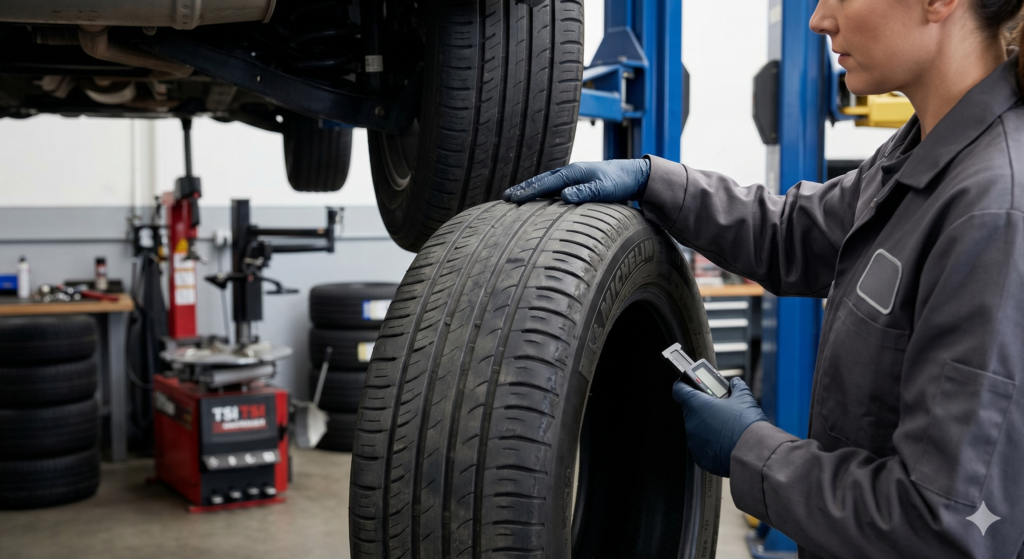
For the average driver, a tire is just a round, black piece of rubber. When they walk into your shop because their car is pulling or they hear a strange humming noise, they are often on the defensive. They expect a sales pitch, not a science lesson.
But for a master technician, a tire is a medical chart. The tread face records exactly how the vehicle’s suspension, alignment, and inflation pressures have been behaving over thousands of miles.
By training your team to move beyond the simple tread depth gauge and truly read irregular wear patterns, you transform your shop from a commoditized tire retailer into an authoritative, trusted service center. Here is how to turn irregular tire wear into a transparent tool for building customer trust and driving high-margin service conversions.
The Big Four: Translating Wear Patterns into Technical Truths
When a vehicle is up on the lift, your technicians should look for four distinct irregular wear patterns. Each tells a specific story about the vehicle’s health.
1. Feathering (The Toe Problem)
-
What it looks like: The tread blocks are worn smoothly on one side but feel sharp or jagged when you run your hand across the tire in the opposite direction.
-
The Technical Cause: Incorrect toe alignment. The tire is essentially being scrubbed sideways down the highway instead of rolling straight.
-
The Customer Explanation: “Imagine dragging the sole of your shoe sideways across the asphalt while you walk. That’s what your car is doing to this tire. We need to adjust your toe alignment so the tires roll completely straight.”
2. Cupping or Scalloping (The Suspension Problem)
-
What it looks like: Smooth “dips” or scalloped valleys carved out of the tread circumference.
-
The Technical Cause: Worn shocks, struts, ball joints, or severely out-of-balance assemblies. The tire is literally bouncing down the road, creating high-impact contact points.
-
The Customer Explanation: “Your shocks are designed to keep your tire glued to the road. Because they are worn out, the tire has been micro-bouncing at 60 MPH. Buying new tires won’t fix this; the new rubber will just bounce and cup the exact same way if we don’t replace the worn suspension components.”
3. One-Sided Shoulder Wear (The Camber Problem)
-
What it looks like: The inner or outer edge of the tire is heavily worn down to the wear bars (or cords), while the rest of the tread looks perfectly fine.
-
The Technical Cause: Incorrect camber alignment, caused by sagging springs, worn control arm bushings, or a hard hit to a pothole.
-
The Customer Explanation: “Your vehicle is leaning too much weight on the inside edge of the tire, like walking on the inside of your ankles. We need to adjust the camber angle to distribute the car’s weight evenly across the whole tire.”
4. Center-Line Wear (The Inflation Problem)
-
What it looks like: The middle of the tread is worn bald, while both the inner and outer shoulders have plenty of remaining life.
-
The Technical Cause: Persistent over-inflation. High PSI forces the center of the tire to balloon outward, bearing the brunt of the vehicle’s weight.
-
The Customer Explanation: “The air pressure in this tire was kept too high, making it balloon in the middle. We’ll get your new set dialed into the exact manufacturer specifications on your door placard to ensure they wear evenly.”
The Psychology of the Visual Diagnostic
Most consumers feel vulnerable in an auto shop because they cannot see what the technician sees. This is where your shop can separate itself from the competition.
Don’t just write “Needs Alignment” on the multi-point inspection sheet. Bring the customer out to the bay or bring the tire to them.
Pro-Tip for Shop Managers: Have your advisors physically show the customer the jagged edges of a feathered tire or the dips in a cupped tire. Use a visual guide (like the infographic included in this article) to bridge the gap between technical jargon and what they can see with their own eyes.
When a customer physically feels the uneven wear and connects it to a clear illustration, the “sales barrier” drops. They realize you aren’t trying to upsell them an alignment or shocks; you are simply solving the root cause of the problem so their new investment lasts twice as long.
The ROI of Trust: Better Reviews, Higher Conversions
When you educate the customer instead of just selling to them, the business metrics shift dramatically:
-
Increased Ticket Averages: Alignment checks, shock/strut replacements, and bushing swaps are high-margin services. Diagnosing irregular wear unlocks these repairs naturally.
-
Reduced Comebacks: If you mount a fresh set of premium tires on a car with bad toe alignment, those new tires will be ruined in less than 10,000 miles. Solving the alignment issue prevents unhappy “warranty” complaints down the road.
-
Bulletproof Loyalty: Customers remember the shop that took five minutes to explain why their tires wore out prematurely. That education builds a relationship that price-matching competitors can never steal.
The Bottom Line
High-quality tire service isn’t just about changing rubber faster; it’s about providing superior expertise. When your technicians act as forensic investigators for tire wear, you protect your customer’s safety, maximize their tire investment, and position your shop as the undisputed authority in the region.
For more insights on optimizing your bay efficiency, managing scrap volume, and maximizing shop safety, subscribe to the Tire Service International newsletter.